
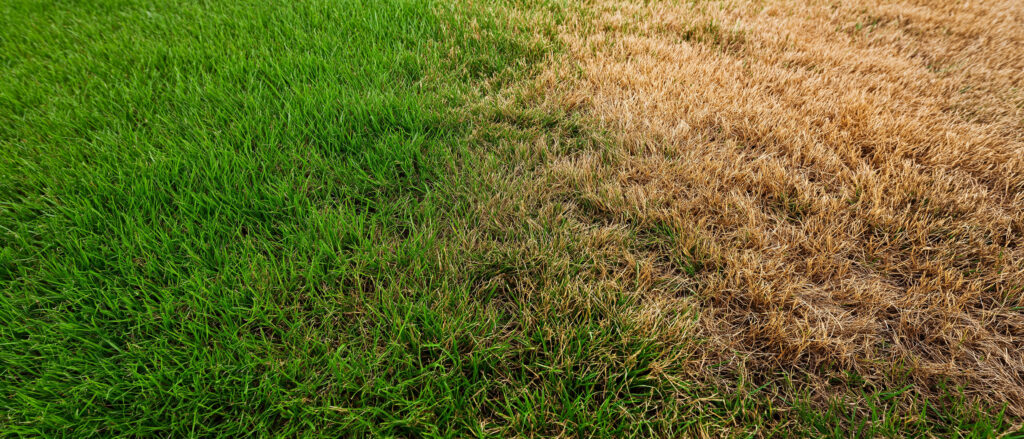
By late summer, commercial turf across Northern Virginia, Maryland and Washington, D.C. may look thin, brown or uneven. Several different problems can create similar symptoms, making diagnosis challenging.
Drought stress, turf disease and irrigation issues can all cause discoloration. Treating the wrong problem may waste water or delay recovery. Before deciding what the lawn needs, start by looking at the pattern, timing and condition of the affected turf.
Signs of Drought and Heat Stress
Tall fescue, one of the most common turfgrasses in the Mid-Atlantic, grows best during the cooler conditions of spring and fall. During hot, humid summers, growth slows, and the turf may brown or enter dormancy.
Signs of drought stress can include:
- A blue-gray color before the turf turns brown
- Grass blades that fold or wilt
- Footprints that remain visible after someone walks across the lawn
- Damage concentrated on sunny slopes, parking lot edges or exposed areas
- Turf that improves after rainfall or correctly timed irrigation
Brown turf is not always dead. Dormancy is a survival response that allows the plant to conserve energy during dry weather. The growing point near the soil surface may still be alive even when the blades have lost their green color.
Signs of Turf Disease
Summer heat does not always mean the lawn needs more water. Hot, humid weather and extended leaf wetness can also encourage fungal disease.
Brown patch is a common summer concern in tall fescue. It may appear as circular or irregular brown areas, especially when nights are warm and the turf remains wet for long periods. Excess nitrogen and nighttime irrigation can increase the risk.
Possible disease indicators include:
- Circular, irregular or expanding patches
- Brown areas that remain moist rather than dry
- Discoloration that spreads despite adequate soil moisture
- Turf decline following humid nights or frequent rainfall
- Similar symptoms returning in the same areas each summer
Not every brown area requires a fungicide. Mowing injury, drought, insects and poor drainage may look similar, so identification should come before treatment.
Signs of an Irrigation Problem
Commercial irrigation systems often serve properties with different slopes, soil conditions, sun exposures and plant types. A system may be running regularly while still applying water unevenly.
Look for:
- Sharp boundaries between green and brown turf
- Dry spots near a broken or misaligned sprinkler head
- Soggy areas beside stressed turf
- Water running onto sidewalks or into storm drains
- Areas that stay wet long after the rest of the property dries
- Turf decline in zones with poor coverage or excessive run times
Daily shallow watering can weaken root systems and increase leaf wetness. A better approach is to inspect coverage, repair mechanical problems and adjust schedules according to weather, soil and plant needs.
Use the Pattern to Narrow Down the Cause
The location of damage often provides useful clues.
Stress along curbs, sidewalks and parking lots may point to reflected heat, compacted soil or limited irrigation coverage. Brown areas in low spots may indicate excess water or poor drainage. Large irregular areas across exposed turf may be related to drought, while distinct patches that develop during humid weather may suggest disease.
It is also possible for more than one issue to occur at the same time. For example, an irrigation problem may weaken turf and make it more vulnerable to disease.
What Should Property Managers Do Next?
A late-summer turf inspection should include:
- Checking soil moisture in both green and brown areas
- Running the irrigation system and watching each zone
- Looking closely at grass blades and the edges of damaged patches
- Reviewing recent heat, rainfall and watering patterns
- Checking for compaction, drainage issues or insect activity
August is also the right time to identify areas that may need fall aeration, overseeding or soil testing. Irrigation repairs should be completed before seeding so new turf can receive consistent moisture during establishment.
A careful diagnosis helps property teams avoid unnecessary treatments and focus resources where they will have the greatest effect. At HLS, we’re here to help evaluate summer turf damage, inspect irrigation performance and help build a site-specific recovery plan for the fall season. Contact us today to schedule a professional evaluation.