
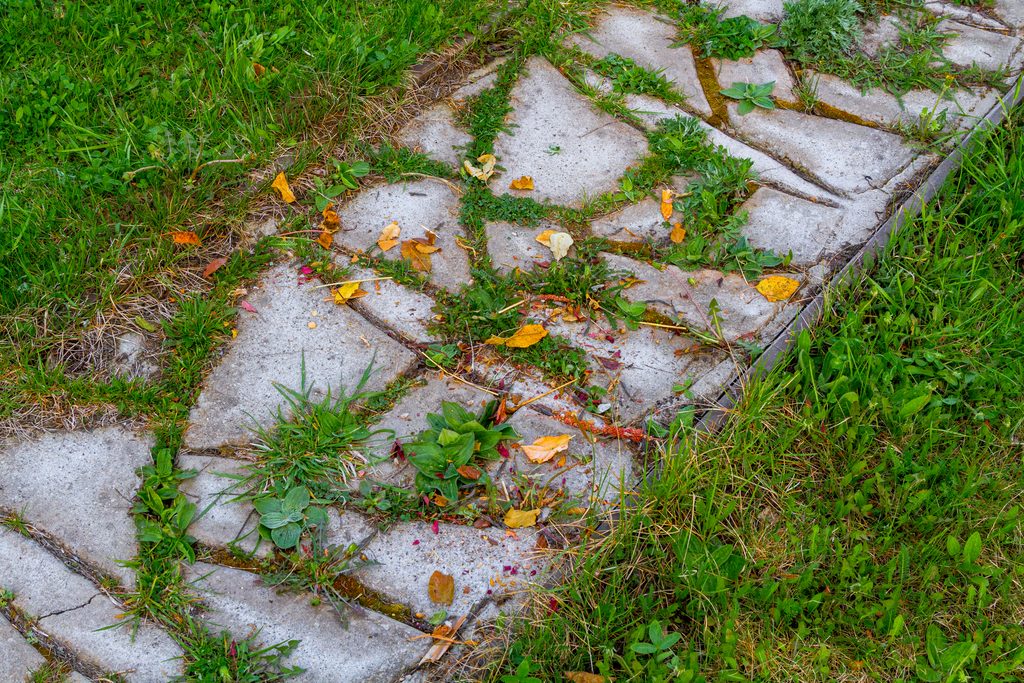
Fall weeds can seem like a minor appearance problem, but on commercial properties, they often reveal something more important about the condition of the landscape.
For property managers and HOA boards in Northern Virginia, Maryland and Washington, D.C., September is a good time to look closely at where weeds are appearing and why. Cooler temperatures help tall fescue recover from summer stress, but they also create favorable conditions for winter annual weeds to begin germinating.
Instead of viewing every weed as an isolated problem, it helps to ask what the weed pressure may be telling you about the turf, soil, drainage or maintenance conditions underneath it.
Thin Turf Leaves Room for Weeds
One of the most common reasons weeds appear is simply that the turf is not dense enough to compete with them.
Tall fescue is widely used across the Mid-Atlantic, but summer heat, humidity, drought, disease and heavy traffic can leave it thin by September. Once gaps develop, weed seeds have more access to light, water and open soil.
This is why fall weed pressure is often connected to summer turf stress.
Areas that repeatedly develop weeds may also show:
- Thin or bare turf
- Heavy foot traffic
- Compacted soil
- Poor irrigation coverage
- Excessive shade
- Damage near sidewalks or parking lots
Dense turf is one of the best long-term defenses against weeds. If a property has recurring weed pressure, fall aeration and overseeding may be more important than simply treating the weeds that are already visible.
Weeds Can Point to Compacted Soil
Commercial properties experience more soil compaction than many homeowners realize.
Common areas, building entrances, walking routes, maintenance paths and equipment traffic can compress the soil over time. When soil particles are packed together, there is less space for air, water and healthy root development.
The result is often weak turf and open areas where weeds can establish.
If weeds keep returning in the same high-traffic locations, soil compaction may be part of the problem.
Core aeration can help relieve compaction by removing small plugs of soil and opening channels for air, water and root growth. For cool-season turf such as tall fescue, late summer into early fall is the preferred renovation window.
Some Weeds May Signal Moisture Problems
Not every weed problem starts with dry soil.
Some weeds are more likely to thrive in wet, compacted or poorly drained areas. Nutsedge, for example, often becomes noticeable in areas with excess moisture or disturbed soil.
If weeds are concentrated around low spots, downspouts or areas that stay wet after rain, the property may have a drainage or irrigation issue.
Watch for other signs such as:
- Standing water
- Soggy turf
- Runoff across sidewalks
- Mulch washing out of beds
- Turf thinning in low areas
- Irrigation zones that remain wet longer than others
In those cases, weed control alone may not solve the problem. The underlying water movement should be evaluated first.
Fall Weeds May Be Preparing for Spring
Some of the weeds that cause problems in spring actually begin their life cycle in fall.
Winter annual weeds such as chickweed and deadnettle germinate during cooler fall weather, survive through winter and become much more noticeable when temperatures rise again.
That means a spring weed problem can sometimes trace back to conditions that were already developing months earlier.
September and fall maintenance should focus not only on what is visible today, but also on preventing open soil and thin turf from becoming weed-prone areas next spring.
Weed Pressure Can Reveal Weak Turf Near Hardscapes
Property managers often notice weeds first along sidewalks, curbs, entrances and parking lots.
These areas can be especially difficult for turf because they experience:
- Reflected heat
- Heavy foot traffic
- Compacted soil
- Salt exposure
- Equipment traffic
- Irregular irrigation coverage
The same conditions that weaken turf also make it easier for weeds to establish.
If the same edges and transition areas require repeated weed treatment each year, it may be worth looking beyond the weeds themselves. Improving soil conditions, irrigation coverage or turf density may provide a more lasting solution.
Treat the Cause, Not Just the Symptom
Weed control still has an important place in a commercial landscape maintenance program, but the strongest results usually come from combining weed management with better growing conditions.
That may include:
- Improving turf density
- Aerating compacted areas
- Overseeding thin tall fescue
- Correcting irrigation problems
- Addressing drainage issues
- Maintaining appropriate mowing practices
- Using mulch effectively in planting beds
- Identifying weeds before selecting a control method
The goal is not simply to remove individual weeds. It is to create conditions that make it harder for weeds to keep returning.
Use Fall as a Diagnostic Season
September is one of the best times to assess what worked and what did not across the landscape.
If weeds are appearing in the same locations year after year, they may be showing you where the property needs more than a short-term treatment.
Heritage Landscape Services works with commercial properties and HOA communities across Northern Virginia, Maryland and Washington, D.C. to evaluate turf, soil, irrigation and landscape conditions as part of a site-specific maintenance plan. A fall property walkthrough can help identify the underlying causes of recurring weed pressure and determine which areas should be prioritized for renovation or improvement.
Contact us today to get started!