
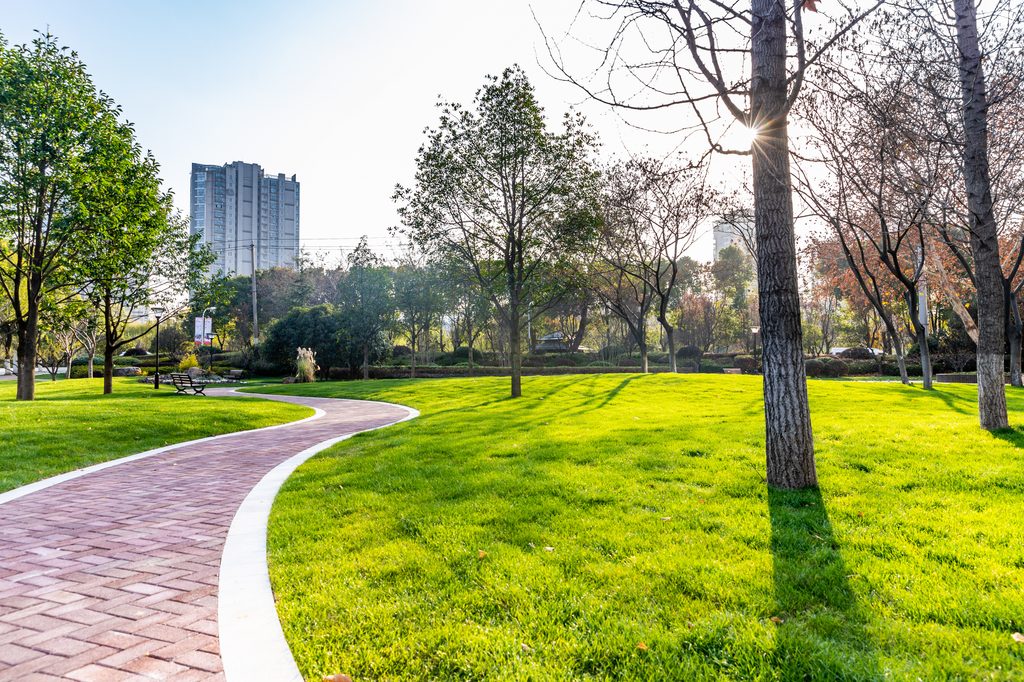
Fall can make it easier to see which parts of a commercial landscape need attention.
By September, summer heat, humidity, traffic and changing moisture conditions have often exposed weak turf, irrigation problems, compacted soil, drainage issues and declining plant material. At the same time, cooler weather creates one of the most important recovery periods for cool-season turf across Northern Virginia, Maryland and Washington, D.C.
The challenge for property managers and HOA boards is deciding what to address first.
Not every landscape issue has the same urgency. Some problems can interfere with fall turf recovery or lead to greater damage if they are ignored. Others may be better suited for longer-term planning.
Here is how to prioritize your fall landscape improvements.
1. Fix Irrigation Problems Before Turf Renovation
If your property has dry spots, overly wet areas, broken sprinkler heads, runoff or uneven turf color, start with the irrigation system.
Fall aeration and overseeding depend on consistent moisture. New seed needs reliable watering during germination and establishment, so unresolved irrigation problems can reduce the effectiveness of turf renovation.
Before overseeding, check for:
- Broken or misaligned sprinkler heads
- Dry areas with poor coverage
- Zones that stay wet too long
- Overspray onto pavement
- Runoff on slopes
- Controller settings that no longer match seasonal conditions
Repairing irrigation first gives new turf a better chance to establish and helps prevent the same dry or wet areas from returning next summer.
2. Address Drainage and Standing Water
Areas that stay wet after rainfall should also move toward the top of the list.
Standing water is not only an appearance issue. Saturated soil reduces oxygen around plant roots, weakens turf and can contribute to erosion, plant decline and recurring bare areas.
Look for:
- Low areas that remain soggy
- Water crossing sidewalks
- Mulch washing out of beds
- Erosion on slopes
- Turf thinning around drainage paths
- Downspouts or paved surfaces directing water into landscape areas
Adding seed or fertilizer will not solve a drainage problem. The source of the water needs to be identified first.
Depending on the property, the solution may involve grading corrections, drainage improvements, soil work or changes to how runoff moves through the site.
3. Prioritize Thin and Bare Turf
Once irrigation and drainage problems are under control, evaluate turf density.
September is a key renovation period for tall fescue because cooler temperatures support active growth and root recovery. Late summer into early fall is also the preferred window for core aeration and overseeding in the HLS service area.
Pay particular attention to:
- Building entrances
- HOA common areas
- Walkways and informal footpaths
- Parking lot edges
- Sunny slopes
- Areas under trees
- Locations damaged by summer heat or disease
Thin turf creates more open space for weeds and erosion. If the underlying conditions can support grass, restoring density in fall can improve both appearance and long-term performance.
4. Relieve Compacted Soil
If turf repeatedly struggles in high-traffic areas, compaction may be part of the problem.
Commercial properties often experience compaction from pedestrian traffic, mowing equipment, construction activity and repeated use of common areas.
Compacted soil has less pore space for air, water and roots. That can lead to shallow rooting, poor drainage and thin turf.
Core aeration can help improve soil conditions by removing plugs of soil and opening channels for water, oxygen and root development.
This is especially important when aeration is paired with overseeding because better seed-to-soil contact can improve establishment.
5. Evaluate Recurring Weed Problems
Weeds should be treated as more than an isolated cosmetic issue.
If weeds keep returning in the same areas, they may be pointing to weak turf, open soil, compaction, excess moisture or another underlying site condition.
Fall is also when some winter annual weeds begin germinating. Chickweed and deadnettle, for example, may begin developing in fall before becoming much more noticeable in spring.
Before focusing only on weed control, ask:
- Is the turf dense enough?
- Is the soil compacted?
- Is the area too wet or too dry?
- Is shade preventing turf from establishing?
- Is the same problem occurring every year?
Correcting the growing conditions can be an important part of reducing future weed pressure.
6. Inspect Trees and Shrubs for Decline
Fall is also a good time to identify plant material that struggled during summer.
Look for:
- Dead or declining branches
- Sparse foliage
- Leaf scorch
- Yellowing leaves
- Plants that have outgrown their space
- Shrubs repeatedly affected by pests or disease
- Plants declining in wet or compacted soil
Not every stressed plant needs to be replaced.
Some may benefit from corrected irrigation, pruning, improved root-zone conditions or better site management. Others may simply be poorly suited to the location.
For mature trees, large branches or potential safety concerns, professional evaluation may be appropriate before making pruning or replacement decisions.
7. Separate Urgent Repairs From Future Enhancements
Not every fall project needs to happen immediately.
Once plant health, turf recovery, irrigation and drainage issues are addressed, property managers can turn to improvements that enhance appearance and function.
These may include:
- Refreshing planting beds
- Replacing outdated shrubs
- Adding fall seasonal color
- Improving entrances or signage areas
- Renovating underperforming landscape areas
- Updating amenity spaces
- Planning drainage or hardscape improvements
- Developing phased landscape upgrades
HLS supports site evaluations, landscape enhancements and longer-term landscape plans that allow property teams to prioritize improvements over several budget cycles rather than addressing everything at once.
Start With the Problems That Affect Everything Else
A simple way to prioritize fall landscape work is to start with the issues that can prevent other improvements from succeeding.
Fix water problems before planting.
Correct compaction before expecting turf to fill in.
Understand why grass is thinning before adding more seed.
Identify why a plant is declining before replacing it with the same thing.
Fall is one of the best opportunities to correct these underlying conditions while also preparing the landscape for the next growing season.
Heritage Landscape Services works with commercial properties and HOA communities across Northern Virginia, Maryland and Washington, D.C. to evaluate landscape conditions and identify the most important next steps. A fall site walkthrough can help separate immediate maintenance needs from longer-term improvements and build a more practical plan for the property.
Contact us today to get started!